

The Government is signalling that it wants to take a more flexible approach to new building insulation standards. The goal is to align building requirements with performance, practicality, and cost.
That’s a sound direction. It reflects what most people involved in housing already know: not all homes are the same, and not all regions should be treated as if they are.
So why are rental properties still tied to a rigid, one-size-fits-all model?
The Healthy Homes Standards (HHS), while well-meaning, apply uniform rules across vastly different climate zones. Meanwhile, building law is beginning to acknowledge regional variation and performance outcomes. Rental housing deserves the same treatment.
One Rule, Two Zones, No Logic
The Healthy Homes Standards divide New Zealand into three climate zones. But Zone 1 and Zone 2 are treated exactly the same when it comes to insulation requirements.
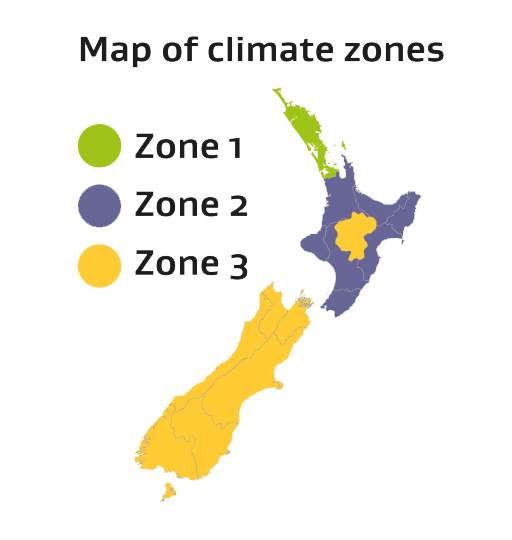
That means landlords in Auckland and Taupō are installing the same insulation, despite very different climates. The same goes for Hamilton and Napier, Whangārei and Masterton. Anyone who has lived in these places knows the weather isn’t remotely alike.
Still, the rules are identical, and landlords carry the cost. That might be tolerable if the extra insulation added real benefit. But in many cases, it doesn’t.
Building Code Moves On. Healthy Homes Should Too
The Building Code is beginning to adopt a performance-based approach. Insulation upgrades are only required when they actually make a meaningful difference to the building’s thermal efficiency.
That’s what practical housing regulation looks like.
The Healthy Homes Standards should follow the same logic. Not to cut corners, but to reflect how houses actually perform in different parts of the country.
Blanket rules across different...