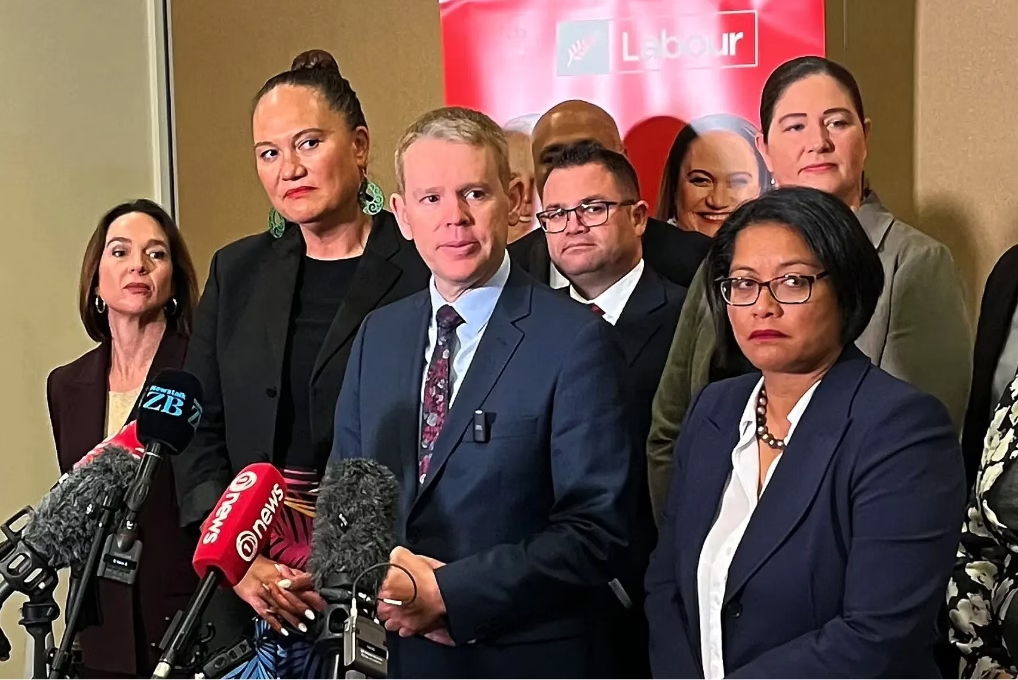
When Chris Hipkins unveiled Labour’s new idea, a targeted capital gains tax on property investors to fund three free doctor visits for every New Zealander, he was not just talking policy. He was staging theatre. On one side of the stage stood the country’s landlords, caricatured as profiteers of an overheated market. On the other side, sick Kiwis waiting for healthcare. It is a neat moral arc: punish the sinner, sanctify the saint.
The problem is that economics rarely bends to dramaturgy. The tax base and the spend do not match, and investors know it. You cannot simply tie an unpredictable revenue stream to a politically sacred expenditure line and call it good government. Capital gains tax receipts, particularly when pinned to property cycles, rise and fall with the market. The same volatility that frustrates investors also undermines the promise of stable healthcare funding. In lean years, when transaction volumes fall, how many of those “guaranteed” doctor visits evaporate?
The deeper contradiction is buried in Labour’s own talking points. Hipkins has spent months urging that investment be directed away from property speculation and toward more productive sectors. Yet the more successful that redirection, the smaller the capital gains tax take. The policy creates a paradox: either it fails and raises revenue, or it succeeds and starves itself. It reads better in a press release than on a balance sheet.
Tax Settings That Work for Everyone
From investors’ perspective, the concern is not taxation itself. Investors understand that fairer taxation is part of a functioning system. Few would object to a framework that balances revenue needs with economic stability. The concern is the habit of governments to single out one group as the villain of the piece. Targeted taxation, especially when wrapped in moral language, creates resentment, distorts incentives, and undermines...