
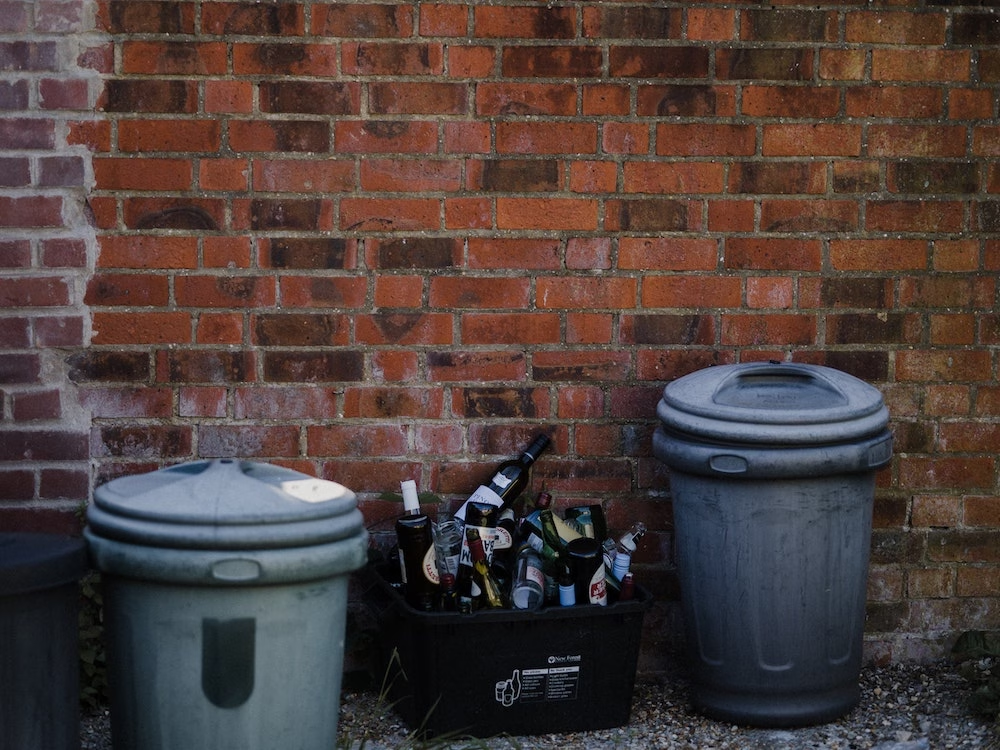
A bit of a role reversal; this time, we are the ones asking the question.
The Auckland council is amid a three-year transition to fully rates-fund kerbside rubbish collection. By June 2025, all Auckland households will have a choice of three rubbish bin sizes (80-litre, 120-litre, and 240-litre), each with a different price (rates) to accommodate different household needs and choices. Households currently on the user-pay bin-tag model will experience the transition most keenly. Rubbish collection fees will eventually be subsumed into the council rates bill as an additional item.
Why is this a rental issue? Currently, per section 39 of the Residential Tenancies Act, landlords with properties in the bin-tag areas do not pay for their tenants’ rubbish to be collected. In contrast, landlords with properties in the suburbs that already have rates-funded rubbish collection do. Once uniformity is applied across all Auckland households to have rubbish collection funded by rates, landlords will absorb all the corresponding and, likely, additional costs. Cleaving out the collection cost to pass onto the tenant (much as you would a Watercare bill) is out of the question under s39(2)(a). In any event, the actual cost is unlikely to be detrimental to landlords. But the situation does beg two practical questions:
- Given that there are three bin sizes to choose from, how does a landlord determine a ‘reasonable’ bin size to provide the tenant with;
- Suppose the tenant requests and the landlord agrees to a bigger-sized bin than provided at the start of the tenancy. Would the provision of the bigger bin be considered an increase or improvement of facilities or services under s28(1)(b) that could give rise to the parties agreeing to a rent increase?
The Tenancy Tribunal is the...