
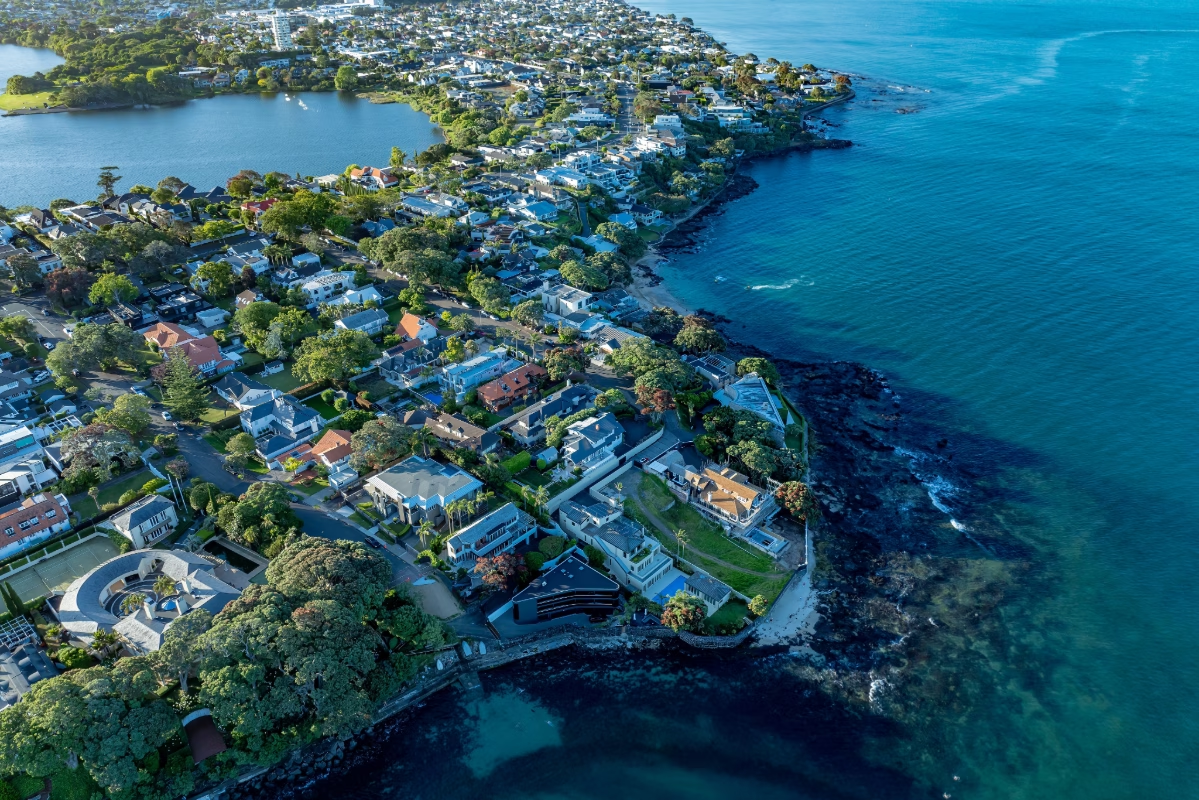
For years, owning land in New Zealand, particularly undeveloped or underutilised land, wasn’t just about potential. It was about scarcity. Planning rules were the safety net. Land-banking worked because restrictive zoning and slow councils kept supply tight and options limited, a structural strategy born out of economic pragmatism.
But those days are numbered.
In his speech to the Local Government NZ Conference today, Housing Minister Chris Bishop declared war on the idea that urban land should remain artificially scarce. He spoke of “smash[ing] the urban limit” and resetting market expectations of future scarcity. The Minister is done talking. He’s legislating.
If you own land with development potential (fringe, infill, or near transport nodes) this is your moment. And if you’re waiting for the next election to make a move, you may already be too late.
“The speculative premium on land scarcity is no longer your hedge,” says APIA General Manager, Sarina Gibbon, “it’s your expiry date. Either you extract value, or someone else will.”
Upward and Outward: The Dual Playbook
Minister Bishop made it clear: this government isn’t choosing between intensification or greenfield. It wants both.
That opens dual opportunity streams for land investors:
- Greenfield and fringe land: Expect new infrastructure funding tools, zoning liberalisation, and less resistance to suburban sprawl. The edge of town is about to move.
- Urban and transit-connected land: Standardised zones, density uplift, and removal of bespoke plan restrictions make it easier to build up—and build smart.
The idea is to replace piecemeal, parochial planning with national direction that enables growth rather than throttling it. Think fewer overlays, less bespoke nonsense, and faster pathways to activate the land you already own.
The End of Passive Scarcity
At the heart of the Minister’s speech is an uncomfortable truth for landowners:
“We are...